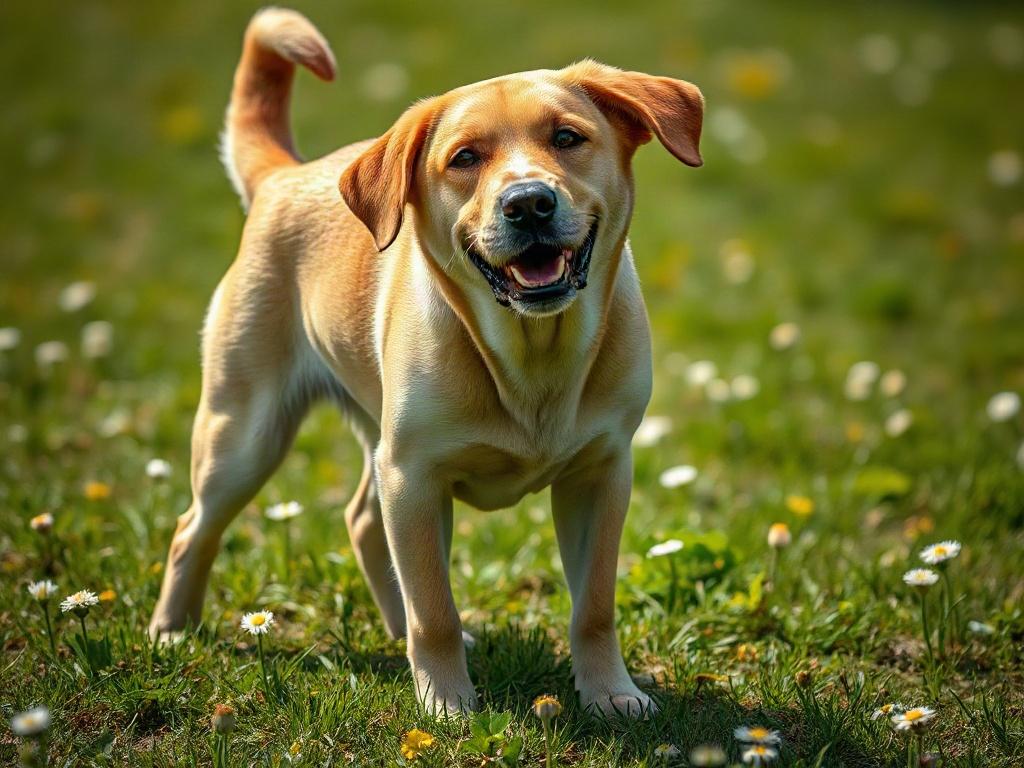
Dogs communicate through more than sounds. Their movement, posture, orientation, distance, and timing all contribute to what we can understand about an interaction. A dog may approach in a curve, turn away, pause, move closer, or leave. Those actions happen within an interaction, not in isolation.
One signal rarely tells us exactly what a dog feels. A wagging tail tells us the tail is moving; it doesn’t, by itself, tell us whether the dog welcomes contact. The useful response is to consider the whole interaction—and make room for the dog to change it.
Describe what you see, then respond
Suppose a dog approaches, sniffs, and turns their head when someone reaches down. You don’t have to settle on whether the dog is nervous before acting. Ask the person to pause and stop reaching. Give the dog space to move away or return.
The dog’s response helps guide what happens next. If they leave, let them. If they return, keep the interaction low pressure and pause again. That’s not a test the dog has to pass; it’s a way to make the interaction more responsive.
A useful description might be: “The dog approached, turned away when the person reached, then came back after the person stopped.” That says more than a single label such as “friendly” or “shy,” and it points toward a practical adjustment.
Body language is information for action
We don’t need a perfect translation of every movement. We need to notice when the interaction changes and respond in a way that gives the dog useful options: more space, less pressure, or a chance to disengage.